The warning signs were there long before the lights went out – but no one in power chose to listen, writes Rant Sport’s F1 expert Ella Magyar.
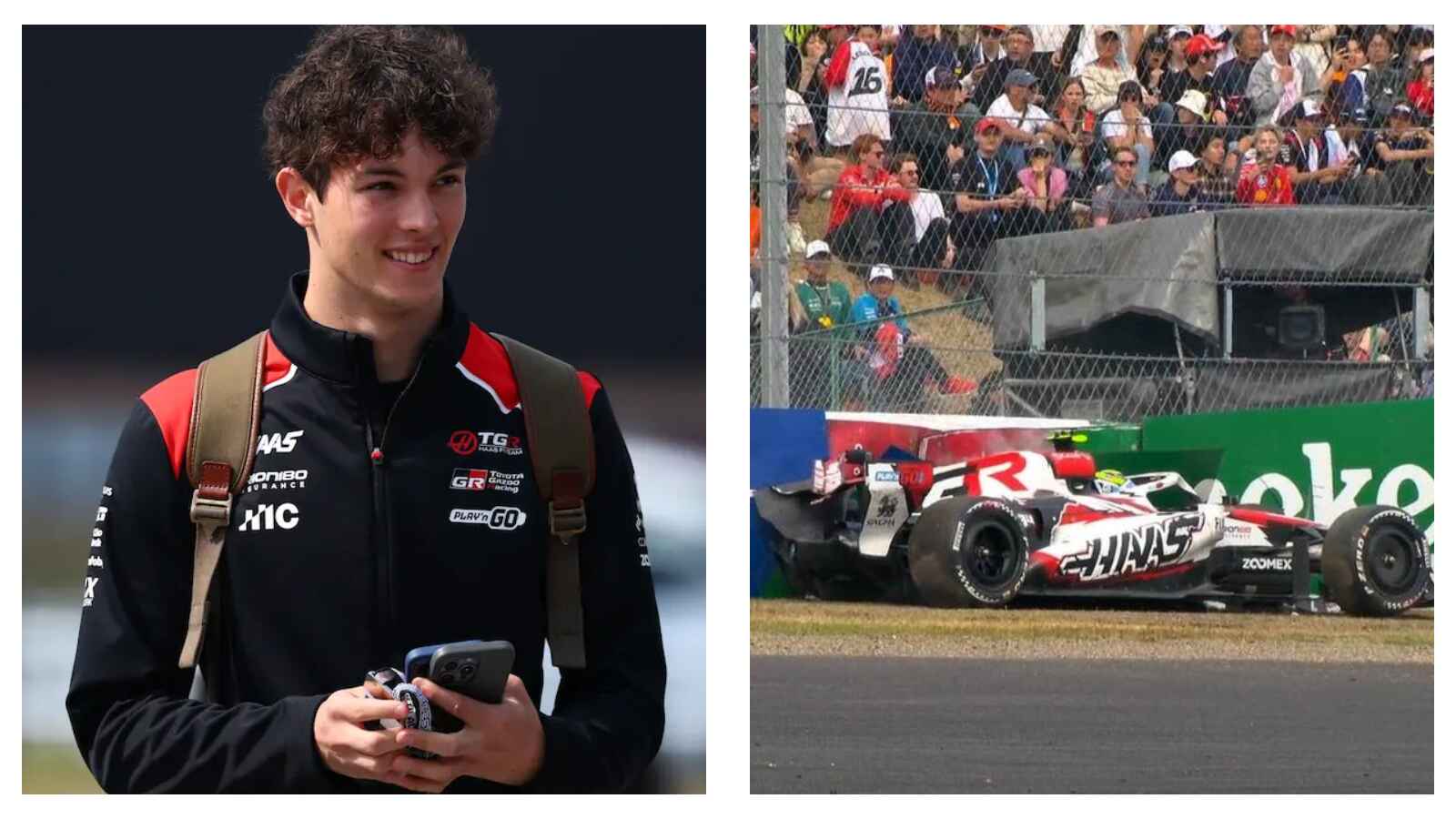
Oliver Bearman dramatically crashed out of the 2026 Japanese Grand Prix, limping away with minor injuries.
Now, in the aftermath, the sport is being forced to face an uncomfortable truth: the regulations are dangerous, and the drivers predicted this.
The crash
On lap 22 of the race, Bearman was closing in on Franco Colapinto for 17th place, approaching the high-speed Spoon Corner, but soon found himself in the wall.
The incident was enormous as Bearman was careering toward the barriers at 191 mph, causing a 50 g-force impact.
Bearman was pictured limping away from the car, but thankfully, an X-ray revealed he had no fractures and only sustained a minor injury to his knee.
YOU MAY ALSO LIKE: F1 opinion: The top five moments of the 2026 Formula One season so far
Driver error?
Initial thoughts in the race centred around driver error – who was at fault?
Due to the enormity of the accident, there was a delay in the broadcast showing the crash to make sure the driver was okay first.
This led to questions around whether it was Colapinto’s fault for shaping a slight defensive move to the left or Bearman’s for simply coming in too hot.
The replay finally revealed the truth.
The cause
Colapinto was harvesting his battery, and Bearman was using boost mode in their entry to the same corner.
Both were within their right to do so and were simply managing their races differently.
The issue was that Bearman, using boost and not harvesting, had a huge closing speed difference of 28 mph.
In an effort not to collide into the back of Colapinto, Bearman had to take quick avoiding action.
Diving to the left, Bearman ended up running out of road and going onto the grass, spinning the car around and sending him into the wall the wrong way around.
The regulations’ responsibility
Unusually, following the incident, there was no blaming over team radio nor investigation by the stewards, confirming it was not driver error.
It is simply the fault of the new regulations and their requirements.
With so much focus on battery management, when a driver is harvesting their battery, the closing speed of a driver behind who isn’t is nothing short of dangerous.
This wasn’t a freak accident. Drivers have been predicting it for months.
Driver opinions
Speaking to the media after the race, Williams driver Carlos Sainz said: “We’ve been very vocal on this – we’ve been warning that this kind of accident will happen.
“With these closing speeds, this was going to happen.”
This isn’t the first time Sainz has spoken out about this specific safety concern with the regulations, and he wasn’t the only one.
Fernando Alonso stated on the grid before the race that “you find yourself with a higher battery than the car in front and you either crash or you overtake them”.
“It’s an evasive manoeuvre – not an overtake,” he added.
READ NEXT: Tottenham opinion: Spurs chaos continues – but who can actually fix it?

My take
For months, concerns raised by drivers were brushed aside as overreacting or complaining, and some were even slammed for this in the media.
Yet those same voices echo through the paddock with a chilling clarity as the consequences of those ignored warnings were strewn across the circuit.
Due to the cancellation of the Bahrain and Saudi Arabian Grands Prix, there is now a month’s break before the next race.
The FIA simply must accept that they got something wrong and make changes to the regulations before another driver gets hurt.
What happened was simply unacceptable.
We were promised a bold new era of F1 that has now turned into a farce, sparking serious questions about safety, decision-making, and ignorance from above.
In the end, the crash wasn’t just another accident – it was an inevitable culmination.
MORE BY ELLA MAGYAR: F1: Expansion era – Is F1 growing too fast?